Things Worth Caring For - Field Notes Issue 003
RK Collective on circular design, repair culture, and material storytelling. Things are cheap because we borrow credit from the future. Issue 003 explores the true cost of things, design as an act of solidarity, and a chair made from Melbourne protest fabric that carried the handwriting of Iranians.
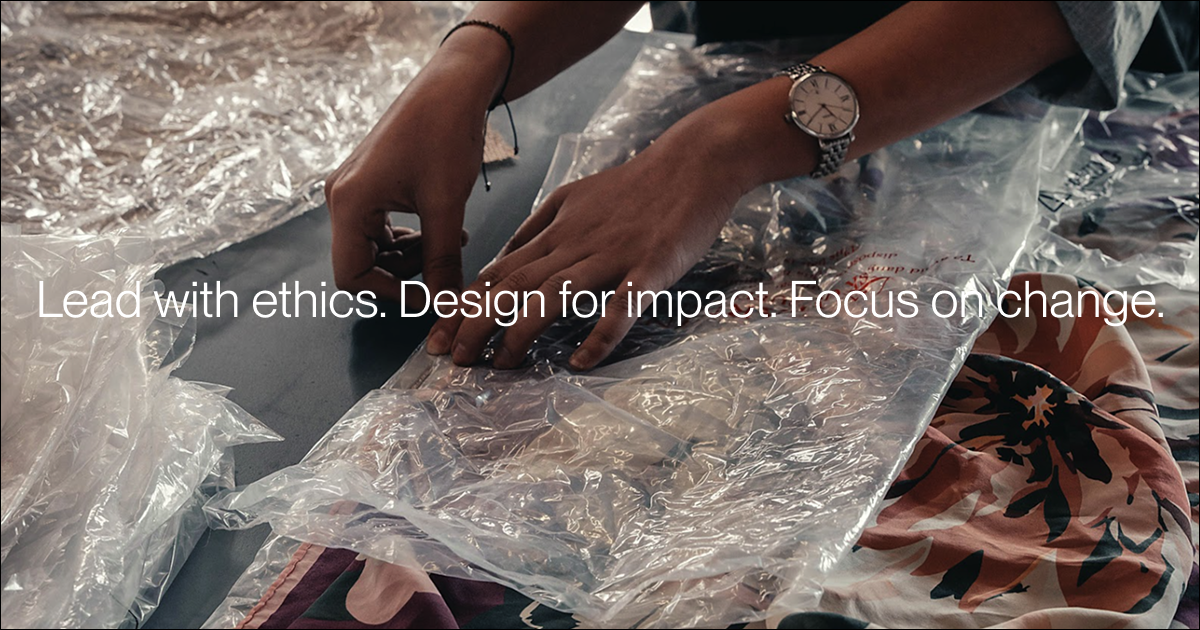
Welcome back to Field Notes from RK Collective, a Sydney based product design studio helping our collaborators turn their impact ambitions into tangible products, systems and experiences; designed with the communities they are meant to serve, built on circular principles, and delivered from strategy to market.
Field Notes is our monthly dispatch, not a portfolio update or a pitch. Just an honest account of what we're making, reading, and wrestling with. If you'd rather not be here, no hard feelings, unsubscribe below. If you stay, we'll make it worth your while.
Did We Stop Making Things Worth Caring For?
By Nila Rezaei
My mum used to send me down the road to the repair man when the hairdryer broke.
Not because we were particularly conscious or because repair was fashionable. Because throwing it away and buying a new one just wasn't the immediate choice. The repair man existed and did a great job. The hairdryer was great and worth fixing. That was just how things worked.
Somewhere between then and now, we designed our way out of that world. Not through a single bad decision, but through thousands of small ones, joints that couldn't be undone, components that couldn't be sourced, products that cost more to repair than replace. We didn't stop caring about our things. We just stopped making things worth caring for.
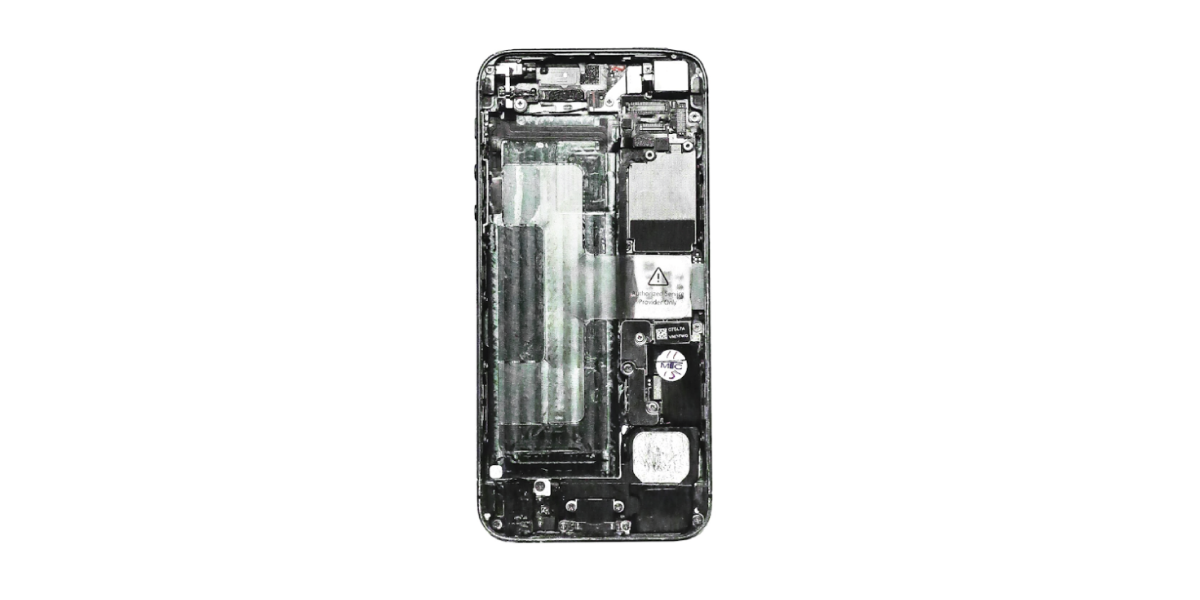
Part of what made that possible is something we rarely say out loud: things are cheap because we borrow credit from the future. The true cost of a product has never been in its price tag. It is in the soil that absorbed the runoff, the community that processed the waste, the generation that will inherit the landfill. We have been designing for a price point that only works if you ignore everything downstream. The circular economy asks us to account for what we have always externalised. That is not just a design challenge. It is an honesty challenge.
And that shift didn't happen in a vacuum. The convenience we designed into western consumption had to go somewhere. The cheap materials, the short lifespans, the waste, it travels. It ends up in communities that didn't design it, didn't choose it, and don't have the infrastructure to deal with it.
There is another version of this conversation I keep hearing that I don't feel good about. Not because the logic is wrong, but because of what gets left out. When geopolitical conflict gets framed primarily as a resource story, a supply chain disruption, a convenient accelerant for the plastic transition (because oil is scarce), the people living inside that conflict disappear from the frame entirely. That erasure is painful to watch, the same way that it’s painful to watch ‘Repair’ and ‘Reuse’ got abandoned.
A Moment in the Studio: Design as an Act of Solidarity
A chair made from protest stories, and the woman who recognised her child's drawing in it
Melbourne Design Week last week was extraordinary.
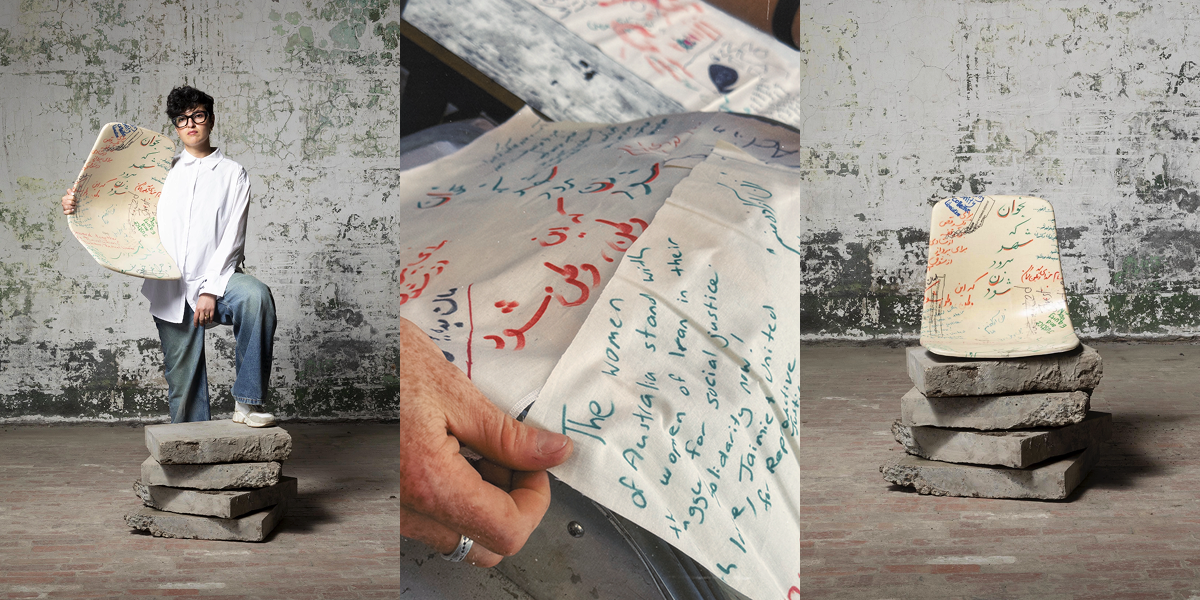
We showed a new Crafted Liberation chair at the 100 Chairs exhibition at Abbotsford Convent, made in collaboration with Parisima Kouklan, using her Cloth of Unity: 55 metres of protest calico collected during the 2022 and 2023 Melbourne demonstrations.
On May 16 during our opening night, something interesting happened.
Iranians living in Melbourne came to the exhibition and stood in front of the chair, some had tears in their eyes. One woman pointed to a part of the surface and said: that is my handwriting. Another said: I remember this fabric. I was at that protest. And now it is here, in a chair, in an exhibition, in a city I have made my home.
One woman told us her child had drawn something on the calico that day. She recognised it on the surface of the chair.
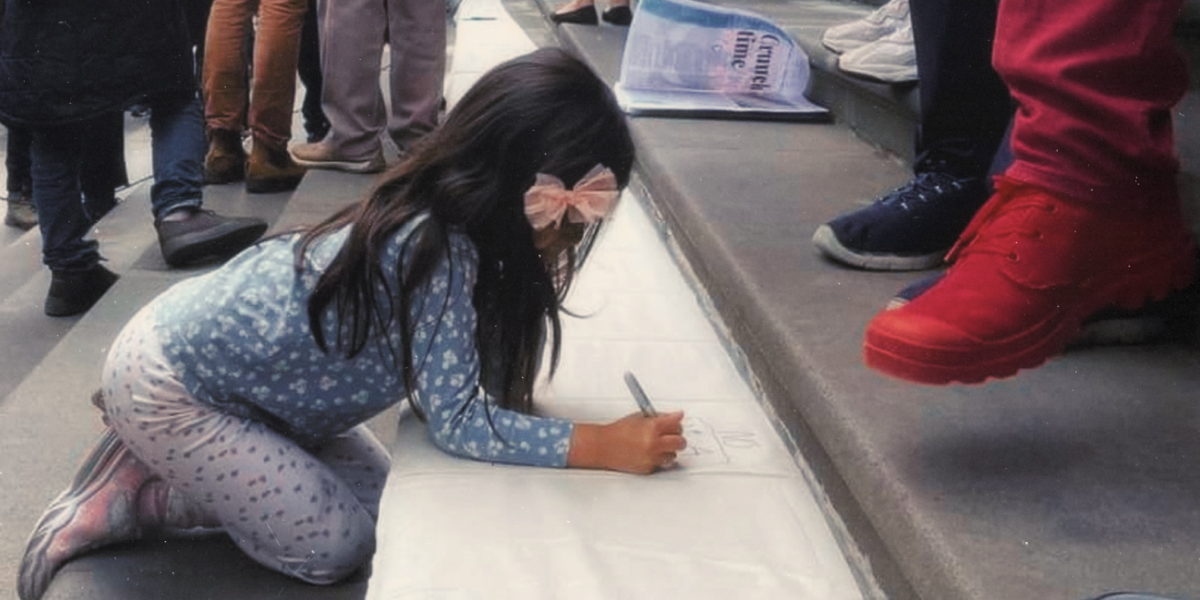
What struck us was that Parisima came from exactly the same place we did when we started Crafted Liberation. Not from a brief or a commission. From a personal need to take action, and a conviction that design could give voice to more people than verbal protest ever could. Through materiality. Through participation. Through making something you could sit in, touch, inherit.
That is design as an act of solidarity. Not design about solidarity. Design as the act itself.
And what Melbourne showed us is the next question: what happens when this thinking enters our civic spaces permanently? When the chair in the café, the bench in the plaza, the surface in the community hall carries the stories of the people who use it? People care for things longer when they recognise themselves in them. Spaces stop being passive observers of history and become active participants in it.
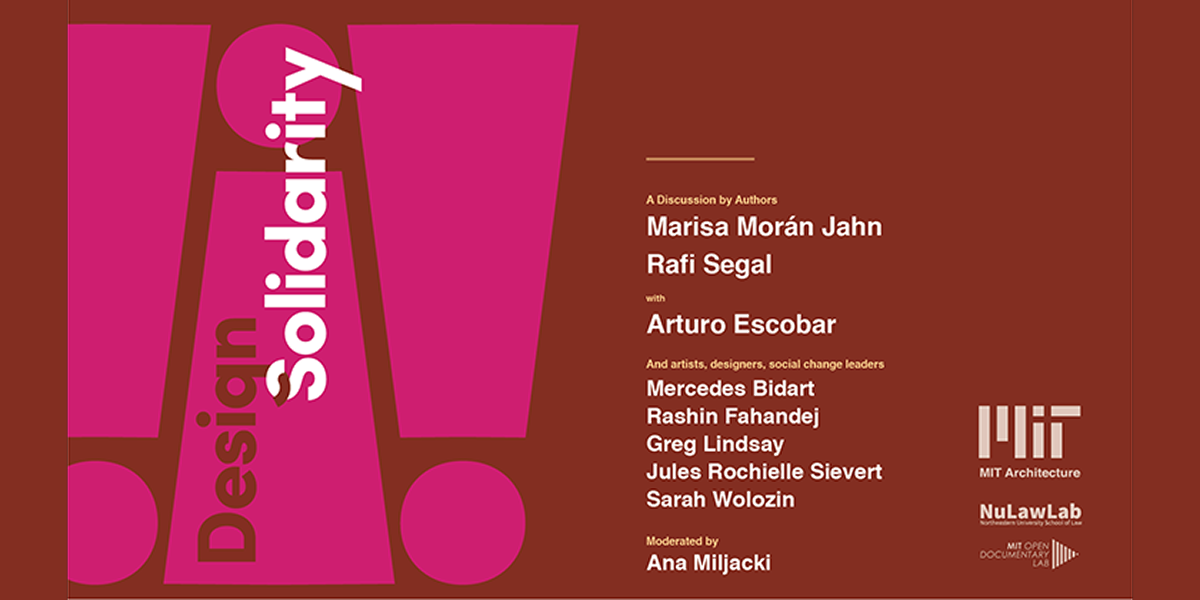
We have been reading Marisa Morán Jahn and Rafi Segal's Design and Solidarity, a collection of conversations with designers and architects about exactly this. We want to talk about it properly next month. For now, we will just say: if this thread interests you, we would love to hear from you.
In other news
As Chair of the Design Institute of Australia NSW, Nila is proud to support one of Australia's largest design advocacy campaigns. DIA has formally lodged its submission to the Australian Bureau of Statistics (ABS) for the OSCA 2027 Update, the national framework that defines how every occupation in Australia is recognised, measured and valued. This is how our profession gets recognised in policy, in education, and in the decisions that shape what design can do in this country. If you are not yet a DIA member, this is exactly why you should become one.
Chris has completed the AICD Company Directors Course and joined the Australian Institute of Company Directors. It sharpens how we think about governance and puts us in a position not just to deliver projects, but to help govern the ventures behind them.
He is spending June in Austria and southern Germany, meeting local innovators and visiting fabricators and factories. Comparing notes on what each side is solving for, what we can learn from one another, and where collaboration makes sense. If you are in the region and want to meet, drop us a line.
Nila has joined Awesome Foundation Sydney as an ambassador, a global community funding small acts of awesome. Every month there is a $1000 grant being given to make Sydney awesome. Be sure to check out and use this opportunity.
We are quietly working on a new project using material storytelling to honour the women who shaped UNSW Sports. More when we are ready.
And Lastly, Nila turns another year older this week. We will leave it at that.
The default was always repair. We designed our way out of it. We can design our way back.
Nila & Chris at RK Collective, Sydney rk-collective.com