Learning to Hold Both - Field Notes Issue 001
This month we're sitting with duality. Nowruz falls as Iran faces war. We're questioning what circular design really asks of us, and delivering furniture made from ancestral fabrics at SIT Café, Sydney. Honest notes from the studio. No easy answers.
We've been meaning to do this for a while. Field Notes is our monthly dispatch, not a portfolio update or a pitch. Just an honest account of what we're making, reading, and wrestling with.
This is our first publication. If you'd rather not be here, no hard feelings, unsubscribe below. If you stay, we'll make it worth your while.
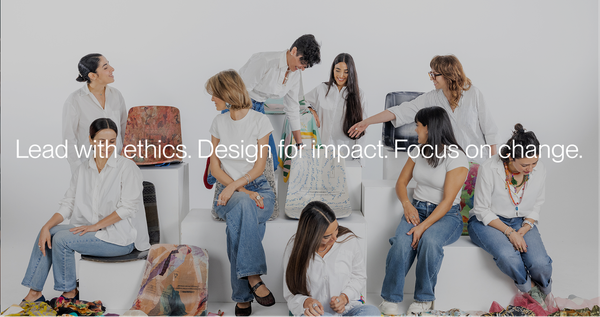
We're Nila and Chris. We met working at a startup designing for delivery riders, people whose dignity the system wasn't built to protect. That became our shared obsession: design for dignity. In 2024, we started RK Collective, a Sydney product design and innovation studio, to pursue it properly.
The world is a lot right now. We're not going to pretend otherwise.
On March 21st, Iranians around the world celebrate Nowruz, the Persian New Year. The renewal of the earth and one of the oldest continuous celebrations of life on the planet. This year, Iran may be at war. We don't have a neat way to hold that. What we do know is that the global south has always paid the price for a world that looks away.
In design we talk a lot about ethics. About care. About dignity. And yet the world closes its eyes remarkably easily when it's convenient. This tension, between what we stand for and what we actually experience, is what's been occupying us this month. And honestly, it's not separate from the work. It is the work.
Are we designing change, or just making the same thing more efficient?
By Nila Rezaei
Last year I met John Thackara in person. I've been reading his work for years but meeting up with him and the community he's built opened up conversations I'm still working through. His Ethics, Design, Care is one I keep returning to, particularly now, preparing for another week of teaching Imperatives for a Sustainable Future at UNSW, and in the middle of a project helping a major institution think about what their spaces should actually do to connect with the people who use them.
His core provocation: circular economy is still fundamentally about produce, produce, produce, just more responsibly. The underlying logic hasn't changed. And then the one that really got under my skin: looking is not the same as caring. You can monitor every metric, measure every material flow, track every carbon gram, and still not be doing the work of care. We've built dashboards where we should be building relationships.
"Looking is not the same as caring. A dashboard is not a system."
Which is what brings me to Cameron Tonkinwise's Design for Transitions - from and to what? Written in 2015, eleven years ago, and still asking a question we haven't answered. His argument runs alongside Thackara's: design helped build the systems that got us here. The same design thinking applied to sustainability largely just makes those systems more efficient. We problem-solve within the existing logic rather than questioning the logic itself.
What I keep sitting with is how directly both of these apply to practice right now. On the institutional project we're working on, the brief was framed around better spaces and experiences. But the real question, the one we keep redirecting toward is about 'better relationships'. What does it mean for people to genuinely feel cared for and that a space belongs to them? That's not an efficiency question. That's a CARE question.
Does this sit awkwardly with commercial reality? Yes, honestly. Clients have timelines, budgets, deliverables. We're not going to pretend otherwise. But we're trying to hold the tension, to do rigorous, beautiful, fundable work that doesn't quietly reproduce the same logic we're claiming to challenge. Not resolved. Still working on it.
A Moment in the Studio: Collaboration with BABA's Place
A material is never passive.
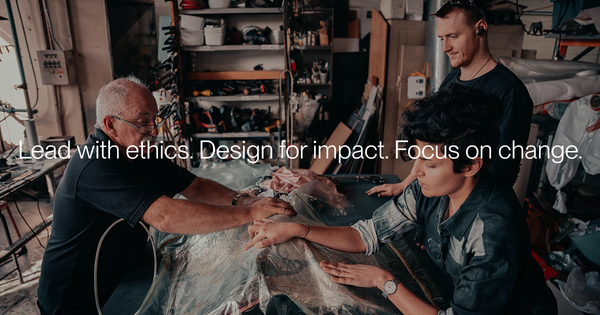
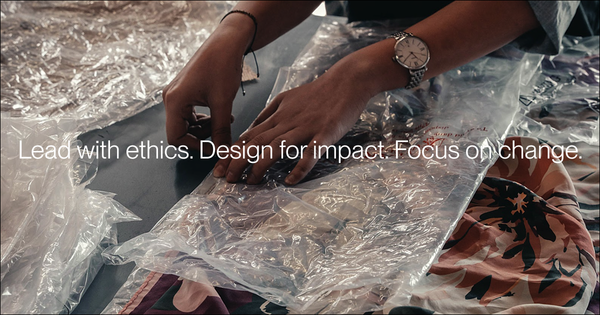
This month we delivered a series of limited edition furniture pieces to SIT Café , the new space by the team behind Baba's Place. The pieces are made from 100% second-hand resources. Consumer waste plastics and ancestral fabrics belonging to the Baba's Place family, carried through migration to Australia and passed down through generations.
"These fabrics travelled the world. They resisted conforming. They were passed down. And now they're here, in a space built by the generation that also chose not to conform. It's a quiet resistance. It's political. It's here when you take a seat."
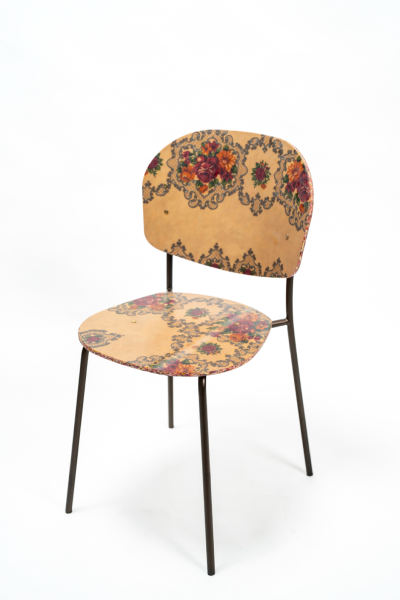
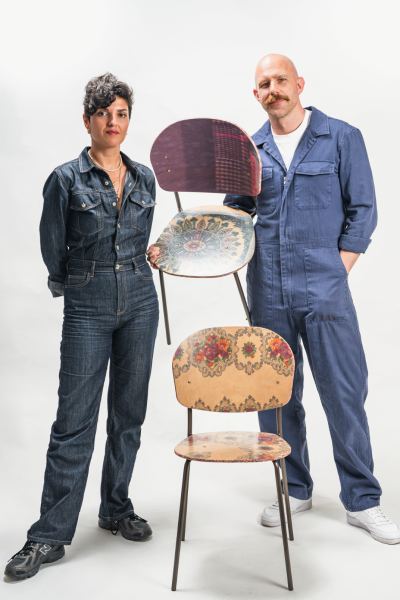
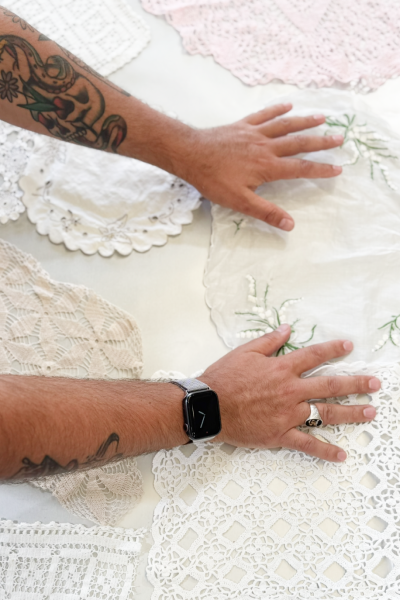
Image Credit: Kerim Erkin
This project is an evolution of our Material Storytelling Framework developed by RK Collective, the same thinking that underpins Crafted Liberation. The idea is simple but it keeps proving true: when an object carries real story, people care for it differently through co-design and cultural connection. They don't just sit on it. They inherit it.
Sit cafe is now open to public. Be sure to visit!
In other news
Nila is joining the judging panel for the Northern Beaches Environmental Art & Design Prize. Know someone who should enter? Send it their way.
Happy Nowruz
May it be a year of renewal, even when renewal is hard.
Nila & Chris at RK Collective, Sydney rk-collective.com